CONTACT A VA LOAN SPECIALIST:808-792-4251

Get Started

Category Archives: Uncategorized

vadmin
By vadmin 8th April 2026 0 Comments

Is a VA Loan Always Better?

VA Loan vs. Conventional Loan (5% Down)

If you’re an active-duty service member or veteran buying in Hawaii, you’ve likely heard: “VA loans are the best option.”

That’s often true—but not always.

Here’s a simple breakdown to help you decide between a VA loan and a conventional loan with 5% down.


Why VA Loans Stand Out

VA loans are built for military borrowers and offer major advantages:

  • No down payment
  • No monthly PMI
  • Competitive interest rates
  • Flexible credit requirements

In Hawaii’s high-cost market, zero down can be a huge advantage—letting you keep cash on hand for reserves or investments.


When a Conventional Loan Makes Sense

A conventional loan with 5% down can offer:

  • No VA funding fee
  • More flexibility in some property types
  • PMI removal once you hit 20% equity

The tradeoff: monthly PMI, which increases your payment early on.


Key Differences

Upfront Costs

  • VA: No down payment, but includes a funding fee (can be rolled into the loan)
  • Conventional: 5% down, no funding fee

VA usually wins if you want low cash out of pocket.


Monthly Payment

  • VA: No PMI = lower monthly payment
  • Conventional: PMI adds to your monthly cost

VA is typically more affordable month-to-month.


Equity

  • VA: 0% down → no initial equity
  • Conventional: Start with 5% equity
  • Conventional may be better if building equity early is a priority and you have cash on hand for a large down payment.

Interest Rates

VA loans often come with slightly lower rates, which can add up to meaningful savings over time.


When Conventional May Be Better

A conventional loan could be the smarter move if:

  • You want to avoid the VA funding fee
  • You plan to own the home short-term
  • You have cash for a down payment
  • You want to preserve VA entitlement

So… Is VA Always Better?

Usually—but not always.

  • Want to minimize upfront costs and monthly payments? → VA loan
  • Want to avoid funding fees and build equity faster? → Conventional

Bottom Line

There’s no one-size-fits-all answer.

The right choice depends on:

  • Your cash position
  • How long you’ll keep the home
  • Your overall financial strategy

In Hawaii, where prices are high, choosing the right loan can make a big financial difference.

Jim Owens
By Jim Owens 12th March 2026 0 Comments

Is My Offer More or Less Likely to Be Accepted with a VA Loan?

If you’re buying a home with a VA loan, you might be asking: Is my offer less likely to be accepted?

It’s a common concern among veterans and active-duty service members. The good news? A VA loan does not automatically make your offer weaker. In many cases, it can be just as competitive as conventional financing—when structured correctly.

Let’s look at what really matters.


Are VA Loan Offers Less Competitive?

Some sellers and listing agents still believe VA loans are harder to work with. Common concerns include:

  • VA appraisals are stricter
  • VA loans take longer to close
  • Sellers must pay extra fees
  • Zero down payment means a weaker buyer

Most of these are outdated misconceptions.

VA loans are backed by the U.S. Department of Veterans Affairs and are one of the safest loan products available. They often close on timelines similar to conventional loans—especially when handled by experienced VA lenders.


What Actually Impacts Whether a VA Offer Gets Accepted?

1. Buyer Strength (Not Loan Type)

Sellers care most about certainty. They want to know:

  • Is the buyer fully pre-approved?
  • Can they close on time?
  • Are they financially stable?

A VA preapproval is just as strong as a conventional one. A preapproval means that the buyer’s income, assets and credit meet the requirements of the loan program to be used, whether it’s VA, FHA, Fannie Mae, Freddie Mac or some other loan program. VA loans have well defined income, and credit requirements, which means a preapproved buyer is financially solid.


2. The VA Appraisal

The appraisal is usually the biggest concern.

VA appraisals must:

  • Confirm the home’s market value
  • Confirm the home meets VA Minimum Property Requirements (MPRs)

These requirements focus primarily on safety and livability—like functioning utilities, no exposed wiring, and no major safety hazards.

If a home is priced correctly and in reasonable condition, VA appraisals rarely cause issues. And remember, any loan type can face a low appraisal in an overheated market.


3. Closing Costs and Seller Concessions

Like other loan programs, VA loans allow buyers to request seller concessions (up to 4% of the purchase price). Sellers are not required to agree. That said, when a seller is open to offering a concession, they can increase the pool of qualified buyers for their home.

With no down payment requirements and no monthly mortgage insurance costs, VA buyers can often offer a higher purchase price than other buyers who may be limited by down payment amounts or monthly mortgage insurance costs.

In truth, the structure of the offer often matters more than the financing type.


4. Zero Down Payment: Benefit or Drawback?

VA loans allow 0% down, which is a powerful benefit. Some sellers mistakenly assume zero down equals higher risk.

In reality:

  • The VA loan guarantee reduces lender risk, which reduces the risk of a credit denial
  • VA buyers often have strong income and employment stability
  • Many VA buyers have assets but choose to preserve cash

Zero down does not mean weak—it means strategic use of earned benefits.


When Could a VA Offer Be Less Competitive?

A VA offer may face challenges if:

  • The home needs significant repairs
  • The listing agent is unfamiliar with VA financing – give us a call, if so!
  • The market is extremely competitive with multiple cash offers
  • The lender lacks VA experience

In ultra-competitive markets, cash and large down payments may win. But that’s about terms—not because the loan is VA.


How to Make a VA Offer Stronger

If you’re using a VA loan, here’s how to increase your odds of getting an accepted offer:

Get preapproved.

A strong approval letter reduces seller anxiety.

Work with a VA-experienced lender.

Efficiency and communication matter.

Tighten timelines when possible.

Shorter inspection and appraisal windows can help.

Increase earnest money.

This shows commitment and financial strength.

Have your agent or lender educate the listing agent.

Many objections disappear with clear communication.


Can Sellers Reject VA Loans?

Yes. Sellers can choose whichever offer they prefer. They are not obligated to accept VA financing.

The good news is that most Hawaii agents are familiar with VA financing and will not reject an offer on that basis alone.


The Bottom Line

So, is your offer more or less likely to be accepted with a VA loan?

It depends on how it’s structured—but a VA loan does not automatically weaken your offer.

With strong pre-approval, smart strategy, and experienced representation, VA buyers win homes every day—even in competitive markets.

The VA loan is one of the most powerful home financing tools available. Don’t let outdated myths stop you from using a benefit you’ve earned.

If you’re buying in Hawaii and want help structuring a competitive VA offer, working with a team that specializes in VA loans can make all the difference.

Jim Owens
By Jim Owens 25th February 2026 0 Comments

The Best Hawaii Neighborhoods for VA Buyers (by Island and BAH)

Choosing the Right Neighborhood

Using a VA home loan in Hawaii means balancing BAH, commute, and lifestyle. Hawaii’s market is different from the mainland, so choosing the right neighborhood matters.

Below is a quick overview of military‑friendly areas on each island and how they typically line up with VA buyers’ budgets.


How BAH and VA Loans Fit in Hawaii

Your BAH is usually the starting point, not a hard cap. Many buyers are comfortable with a payment close to BAH if it fits their overall budget.

Because VA loans can offer zero down, they’re especially helpful in a high‑cost market like Hawaii. Property type—single‑family, townhome, or condo—often makes as much difference as the neighborhood itself.


Oahu: Where Most Service Members Buy

Oahu has the largest concentration of bases, so it’s the most common island for VA buyers.

West Oahu: Ewa Beach, Kapolei, Makakilo

Newer homes and planned communities attract many VA buyers here. You’ll find lots of military families, a range of townhomes and single‑family homes, and strong access to VA‑savvy agents, with traffic toward town as the main trade‑off.

Central Oahu: Mililani and Wahiawa

Mililani is a popular, suburban planned community for Schofield and Wheeler families, while Wahiawa offers older homes at potentially lower prices. Both areas balance commute and cost better than many Honolulu neighborhoods.

Windward Oahu: Kailua and Kaneohe

Kailua and Kaneohe appeal to buyers prioritizing beach access, scenery, and a slower pace. Prices are higher, so these neighborhoods often work best for buyers with higher BAH or dual incomes.


Big Island: More Space, Lower Prices

Housing payments tend to stretch further on Hawaii Island than on Oahu or Maui.

  • Hilo offers a greener, rainier, more affordable environment with a slower pace and lower home prices.
  • Kailua‑Kona delivers more sun, ocean access, and a resort feel at prices that are often still below comparable Oahu and Maui areas.

Maui: Lifestyle First, with Careful Budgeting

Maui is known for its resort lifestyle, but there are practical options for VA buyers.

  • Kahului and Wailuku in Central Maui offer year‑round communities, services, and somewhat more attainable prices.
  • Kihei and the Lahaina area offer strong lifestyle and beach access but come with higher prices and more vacation‑oriented properties.

Kauai: Quiet Island, Tight Inventory

Kauai has fewer listings but excellent quality of life.

  • Lihue and nearby communities provide everyday convenience and a small‑town feel.
  • Poipu and Kapaa appeal to buyers who want beaches and scenery and are comfortable with higher prices or condo living.

Matching Your BAH to the Right Area

Instead of focusing solely on one “perfect” payment amount, many VA buyers:

  • Choose commute and lifestyle first, then refine budget.
  • Decide early whether they’ll consider condos or townhomes. Buyers can get more living space for less cost. However, HOA fees add to the monthly cost.
  • Look at the total monthly cost, not just principal and interest.

Let us know where you’re stationed and your approximate BAH and we can help you quickly narrow this list to a few neighborhoods that actually fit your payment comfort zone.

vadmin
By vadmin 20th August 2025 0 Comments

Maui Recovery: First-Time Homebuyer Opportunity Program

Buying a home can feel overwhelming—especially in the wake of the 2023 wildfires—but Maui County’s new First-Time Homebuyer Opportunity Program is here to help families take that next step.

Here’s a quick, easy-to-follow guide to what the program offers and how it works:


What You’ll Get Help With

  • Up to $600,000 in assistance to make homeownership more achievable.
  • Covers key expenses like downpayment, closing costs, discount points, and loan principal buydown.
  • Funded through Community Development Block Grant – Disaster Recovery (CDBG-DR) resources to help Maui rebuild and recover.

Who’s Eligible?

  • You must be a first-time homebuyer, meaning no home ownership in the past three years.
  • Your household income should be at or below 120% of the Area Median Income (AMI).
  • Priority is given to renters displaced by the 2023 Maui wildfires, although the program is open to all who qualify.

Terms You Should Know

  • The assistance amount is based on keeping your housing costs under 30% of your pre-tax monthly income.
  • Eligible properties must be single-family homes, condos, or townhomes within Maui County, and must not be located in a flood zone.
  • You’ll need to live in the home, and if you sell in the future, it must remain affordable for another income-qualified buyer—for 99 years.

How to Apply

At Hawaii VA Loans, we’re here to guide you through every step of this program. From checking eligibility to preparing your loan documents, our team is ready to help make homeownership possible.

📞 Call us today at 808-792-4251 or email [email protected] to get started.


Income Eligibility Examples

For a one-person household, income must be at or below:

  • 50% AMI: $47,150
  • 80% AMI: $75,400
  • 120% AMI: $113,050

Final Thoughts

The First-Time Homebuyer Opportunity Program is a powerful step toward rebuilding stability and creating long-term affordability for Maui families. If you’ve been hoping to buy a home, this program could be the support you need—especially with Hawaii VA Loans here to walk you through the process.

Ready to explore your options? Give us a call at 808-792-4251.

Erin Delgado
By Erin Delgado 7th May 2024 0 Comments

Island Dreaming: Top Ten Tips for House Hunting in Hawaii

House hunting in Hawaii can be an exciting yet challenging endeavor due to the unique real estate market and island lifestyle. Here are the top ten tips to help you navigate the process effectively:

Define Your Priorities:

Determine your must-haves, such as location, size, amenities, and budget, before starting your search. Consider factors like proximity to the beach, schools, work, and local attractions.

Research Neighborhoods:

Each Hawaiian island and its neighborhoods offer distinct characteristics. Research factors like crime rates, school quality, access to amenities, and community vibes to find the area that best fits your lifestyle.

Work with a Local Realtor:

Partner with a real estate agent who specializes in the Hawaii market. They can provide valuable insights, guide you through the process, and help you find properties that match your criteria. Certain agents even specialize in helping military buyers.

Visit Multiple Islands:

If possible, explore different Hawaiian islands to get a feel for their unique culture, climate, and lifestyle. This firsthand experience can help you decide which island aligns best with your preferences.

Consider Commute Times:

Traffic congestion can be a challenge, especially on Oahu. Factor in commute times to work, school, and other frequently visited places when choosing a location.

Budget for Additional Costs:

Keep in mind that living in Hawaii often comes with higher costs for utilities, groceries, and transportation. Factor in these expenses when setting your budget to avoid financial strain.

Be Flexible:

The Hawaii real estate market moves quickly, so be prepared to act fast when you find a property you love. Being flexible with your preferences, such as the move-in timeline or specific features, can increase your chances of finding the right home.

Consider Resale Value:

Whether you’re buying as an investment or for personal use, consider the resale value of the property. Factors like location, condition, and potential for renovation can impact its long-term value.

Attend Open Houses and Events:

Take advantage of open houses, local events, and community gatherings to network with residents and get a sense of the neighborhood’s vibe. It’s also an opportunity to ask questions and gather information from locals.

Get Pre-Approved for a Mortgage:

Before starting your house hunt, get pre-approved for a mortgage to show sellers that you’re a serious buyer. This can give you a competitive edge in a competitive market and streamline the buying process.

By following these tips and working with local experts, you can make your house-hunting experience in Hawaii enjoyable and successful. Ready to get pre-qualified for a VA home loan? Contact us today at 808-792-4251 or fill out our secure online loan application. In addition, check out the Buyer Resources section of our website for even more information on Hawaii home buying.

Erin Delgado
By Erin Delgado 6th March 2024 0 Comments

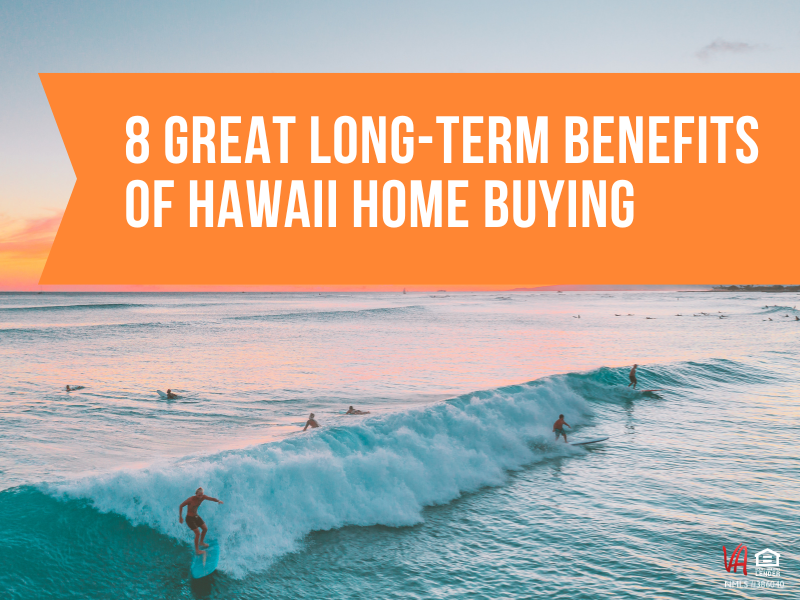
8 Great Long-Term Benefits of Hawaii Home Buying

For many, living in Hawaii is a dream come true. Often times, those who move away from the islands talk about a withdrawal period they experience when readjusting to life on the mainland. It’s true, spending any amount of time in Hawaii can really impact a person’s state of mind. Even more, buying a home in Hawaii can offer several long-term benefits. The combination of personal and financial advantages are too good not to discuss. Without further ado, here are 8 great long-term benefits of Hawaii home buying:

Personal Benefits of Living in Hawaii

  1. Natural Beauty: Hawaii is renowned for its stunning natural beauty, including pristine beaches, lush landscapes, and a tropical climate. Living in such an environment can contribute to a healthier and more relaxed, slower-paced lifestyle.
  2. Quality of Life: Hawaii consistently ranks high in quality of life indices. The tropical climate and outdoor-oriented lifestyle in Hawaii can contribute to improved health and well-being. The opportunity for outdoor activities, such as surfing, hiking, and snorkeling are plentiful.
  3. Cultural Experience: Living in Hawaii provides a unique cultural experience with its diverse population and rich heritage. The state offers a strong sense of community, and embracing the local culture can be fulfilling for homeowners.

Financial Advantages of Hawaii Home Buying

  1. Stability in Tourism-Driven Economy: Hawaii’s economy is heavily dependent on tourism, which can be a positive aspect for homeowners. The consistent flow of tourists can boost local businesses and contribute to economic stability. Thus, indirectly benefiting homeowners through increased local business opportunities and job stability.
  2. Property Appreciation: Historically, real estate in Hawaii has shown a tendency to appreciate over time, making it an attractive long-term investment by providing homeowners with a solid return on investment. Keep in mind, market conditions can vary, and there are no guarantees of property appreciation. Conducting thorough research and consulting with local real estate experts is crucial.
  3. Equity Building: As you pay down your mortgage, you build equity in your home. Over the long term, this equity can be a valuable asset and can be accessed through refinancing or selling the property.
  4. Tax Incentives: Hawaii has certain tax incentives that may benefit homeowners, such as property tax exemptions for owner-occupied residences. It’s important to research and understand the specific tax benefits available.
  5. Potential Rental Income: If you’re not residing in the property full-time, renting it out to long-term tenants could provide a steady income stream.

Ready to take advantage of these great long-term benefits? Call us at 808-792-4251 or fill out our secure online loan application and we’ll get in touch with you. As always, it’s advisable to consider your personal financial goals and circumstances in your quest to become a Hawaii homeowner. We can help you every step of the way!